AI & Search
AI and SEO: Separating the Real Shifts From the Noise
Nine claims about AI and search that are doing the rounds right now, each assessed honestly — including the several that turn out to be true.
360 Digital Promotions 6 min read
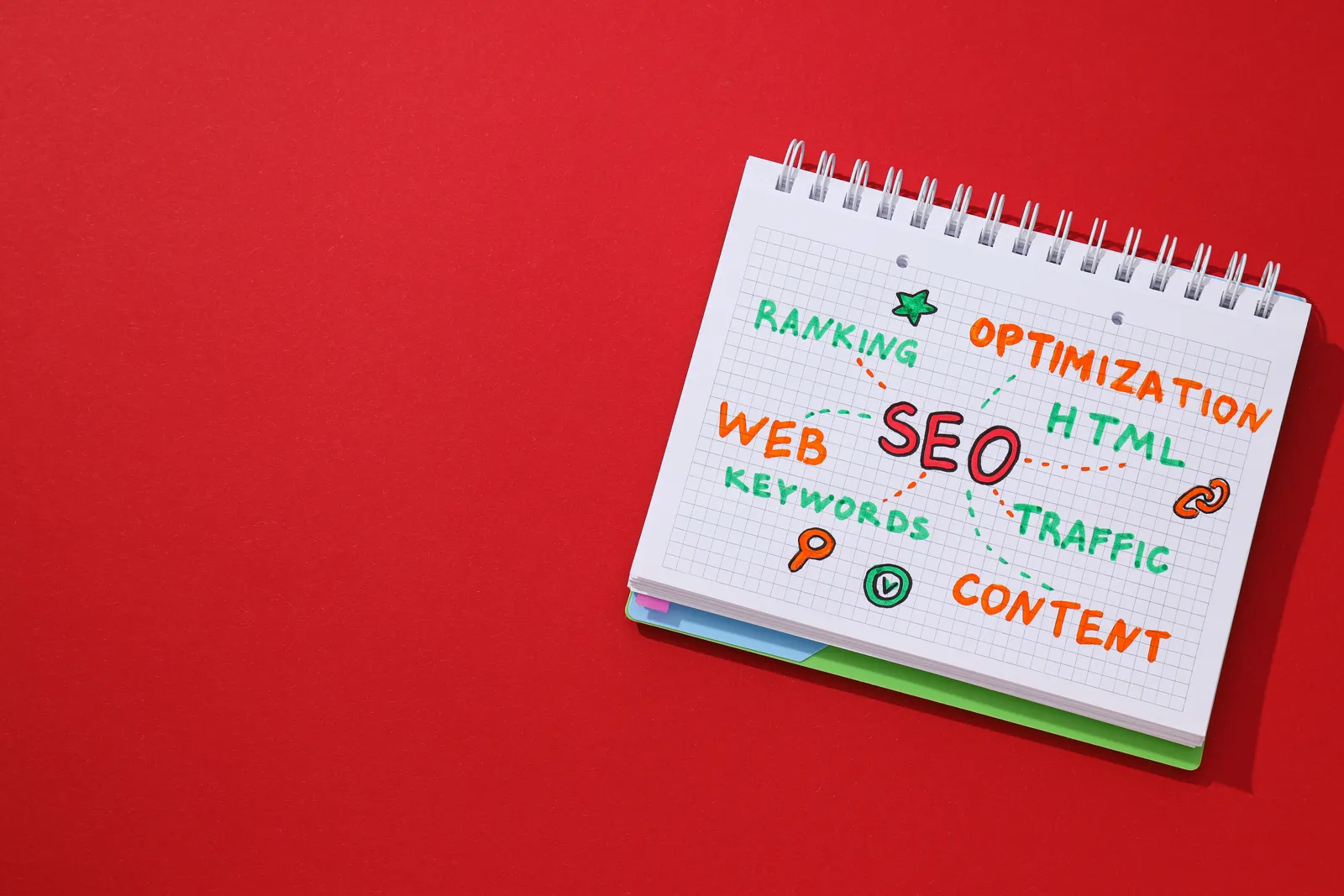
Every genuine shift in search brings a wave of confident advice, most of it produced by people who benefit from you believing it. Some of what is circulating about AI and search is nonsense. Some of it is uncomfortably true. The two are being sold in the same package, which is the problem.
Below are nine claims you will have encountered, each with a verdict and the reasoning behind it. Three of them are true.
“SEO is dead”
False, and it has been declared dead roughly annually since 2005. What is true is narrower: the share of searches that end without a click has been rising, and pages that existed purely to supply a one-sentence fact have lost their reason to exist. That is a real loss for a specific kind of publisher. It is not the end of the practice of making your site findable, because something still has to be crawled, understood and selected in order to be summarised.
“You need an llms.txt file”
Not supported by the current evidence. The proposal is a plain-text file listing your important pages for language models to read. It sounds sensible. The difficulty is that the major crawlers do not appear to be using it.
An Ahrefs analysis published in 2026, covering around 137,000 sites, reported that the overwhelming majority of llms.txt files were never fetched at all. Google’s John Mueller has compared the idea to the old keywords meta tag — a file in which a site owner asserts what their site is about, with nothing verifying the assertion. Anthropic has stated that Claude does not crawl it.
The file costs almost nothing to publish, so there is no strong argument against having one. There is a strong argument against paying anyone to build you a strategy around it.
“Schema markup is now required to appear in AI answers”
False as stated, useful anyway. Google’s own documentation on its AI features says there is no special structured data you need to add to be eligible for AI Overviews or AI Mode. Nobody is gate-keeping inclusion on your JSON-LD.
Structured data still earns its place for other reasons: rich results in ordinary search, unambiguous opening hours and locations, product and review data, and giving any parser a clean statement of what an entity is rather than making it infer one from prose. Implement it because it makes your site machine-legible, not because someone told you it is a ticket into an AI answer.
“Ranking well in classic search no longer matters”
True in reverse — it matters more. The pages an AI answer draws on are heavily drawn from pages that already rank. That is the ordinary consequence of how these systems retrieve: they run searches, take the strongest results, and summarise them. A site that cannot be found by conventional retrieval will not be found by a model performing conventional retrieval on your behalf.
Which means the unglamorous work — crawlability, internal linking, page speed, indexation, clear titles — has not been superseded. It is the precondition. If your site’s foundations are shaky, no amount of AI-era tactics compensates.
“Google penalises content written with AI”
False. Google’s stated position is that it assesses the quality of content rather than the method of production, and its spam policies apply to mass-produced low-value pages regardless of how they were made. The distinction matters enough that we wrote it up separately in where AI content genuinely helps. Short version: the offence is publishing pages nobody needs, not using a tool to write them.
“Queries are getting longer and more conversational”
True, and it has practical consequences. As people get used to asking full questions rather than typing three words, the head terms you optimised for stop describing how a growing share of demand is actually phrased.
The consequence is not that keywords stopped mattering. It is that the useful unit of targeting moved further towards topics and questions, and away from exact strings. A page that answers a cluster of related questions properly will match more of that phrasing than a page tuned to a single term. This is also why your own search query data is more valuable than any tool’s estimate — covered in more depth in keyword research without expensive tools.
“You need a separate GEO or AEO strategy”
Mostly repackaging, with a small real remainder. Look closely at what is being sold under “generative engine optimisation” and most of it is the standard list: accurate content, clean structure, headings that state what the section says, schema, authority, being referenced elsewhere. That is SEO with a new label and a higher price.
The genuine remainder is small: paying attention to how your business is described on the sites models actually draw from, and monitoring whether assistants describe you correctly. That is a real job. It is not a separate discipline.
“Measuring organic performance has got harder”
True, and under-acknowledged. Google’s Search Console now includes generative AI performance reporting, but at present it reports impressions without clicks, click-through rate or queries, and it blends surfaces together. Meanwhile referrals from assistants arrive with inconsistent or absent attribution.
The practical effect is that the gap between what happened and what you can prove has widened. Anyone still presenting you with a tidy causal story about every movement in your traffic is filling that gap with confidence rather than data. The reasonable response is to lean harder on the metrics that are unambiguous — enquiries, calls, revenue — and to hold the rest more loosely.
“AI tools can now do SEO for you end to end”
False, and expensively so. The parts of the job that are pattern-matching at volume — clustering queries, spotting technical errors, drafting, comparing pages against competitors — are genuinely faster with AI, and we use it for exactly those. The parts that decide whether the work succeeds are judgement calls: what this business should be known for, which terms are winnable this year, what to say no to, whether a claim on a page is actually true.
Automating the first set while skipping the second produces a large volume of confidently wrong work, which is worse than a small volume of slow work.
How to assess the next claim you are sent
Three questions get you most of the way.
Who benefits if I believe this? Advice arriving attached to a product for sale deserves more scrutiny than advice that costs the author something to give.
Is there a named source with a stated method? “Studies show” is not a source. A named organisation, a described sample and a date is.
Does it survive the boring test? Most durable search advice is dull: be genuinely useful, be technically accessible, be accurate, be specific, keep going. Claims that promise a shortcut around that have a poor historical record.
If you would rather work from a plain assessment of your own site than from the current cycle of advice, that is what an audit is for.